1. My goal for my individual blog is to begin giving various tips to remember things about the world, and actually explain how that works with the brain so it looks more official. I want maybe one tip per week starting after break and see how that works out.
2. With the Board Game, a realistic goal for the group is that we start to play more board games in the quarter and begin brainstorming the rules. We need to have a concrete basis for how its all going to work.
3. With our school improvement project, we need to finalize the ideas based on our survey results. A final idea needs to form and become less general.
Friday, December 21, 2012

Friday, December 14, 2012
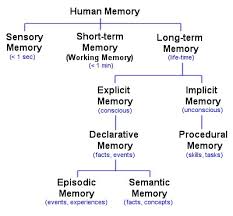
Memory Diagram
This graph is essential to understanding memory and it sums up all my confusing posts into one amazing diagram!
Monday, December 10, 2012
Memory Tips
I know half of you won't do the first one, but it is proven to help.
1. Exercise, the extra oxygen given to your brain improves memory
2. Sleep, when you are deprived of sleep, your brain can't function fully.
3. Socialize, become part of a club or activity
4. Laughter, being happy is good for the brain.
5. Don't stress, it kills happiness.
6. Do something new! New experiences are the best!
7. Eat a healthy diet! That goes for anything really.
8. Always pay attention
Friday, December 7, 2012
Names Experiment.
I asked my friend Jasmine, who always gets Ryan and Kyle confused to particiapate in my experiment. I asked her to distinguish differences between them. She did and I am awaiting for tomorrow to see if she remembers. I might add the variable of having them change clothes!
Next, I actually polled my teachers becasue they never know the difference. They say that one way is that they have to look at both of them at the same time and they don't want to have to do that. Mrs. Sheehan said something very clever and saw that Ryan had a much flatter RIGHT ear than his left. She put the R's together.
Next, I actually polled my teachers becasue they never know the difference. They say that one way is that they have to look at both of them at the same time and they don't want to have to do that. Mrs. Sheehan said something very clever and saw that Ryan had a much flatter RIGHT ear than his left. She put the R's together.
Names!
I hate it when I see somebody and I know I've learned their name, but I just forget if it's right or not! People constantly mix up my friends Ryan and Kyle Jannak-Huang who are twins! I don't see any way you can mix them up because from the first day I met them it was easy to distinguish them. The book reads:
1. Make sure you get the name.
2. Make the name meaningful.
3. Focus on a distinctive feature of the person's appearance.
4. Associate the name with the distinctive feature.
5. Review the association.
I feel like 3 and 4 make the most sense. With my friends Ryan and Kyle, Kyle has a wider face and Ryan's haircut is different. I associate this with their names and it is so easy to remember them! (Search them on google images, they are actually pretty famous!) If only people took the time to review their distinctive features...
1. Make sure you get the name.
2. Make the name meaningful.
3. Focus on a distinctive feature of the person's appearance.
4. Associate the name with the distinctive feature.
5. Review the association.
I feel like 3 and 4 make the most sense. With my friends Ryan and Kyle, Kyle has a wider face and Ryan's haircut is different. I associate this with their names and it is so easy to remember them! (Search them on google images, they are actually pretty famous!) If only people took the time to review their distinctive features...
Wednesday, December 5, 2012
Memory Tips: What was that again?
Ever wonder why you constantly practice something until you "memorize" it but then 10 minutes later you can't even remember! Well if you've never had this experience, then you are probably an alien. The whole point is that you need to repeat, with lots of focus.
Having a kid write "I am going to" instead of I ain't goin' to really isn't going to help because they usually don't care. Repetition does matter though. The more times you do something with complete forcus, the more it is fine-tuned into you brain. Overlearning with complete focus is the only way!
Having a kid write "I am going to" instead of I ain't goin' to really isn't going to help because they usually don't care. Repetition does matter though. The more times you do something with complete forcus, the more it is fine-tuned into you brain. Overlearning with complete focus is the only way!
Wednesday, November 28, 2012
Measuring Memory Part 2
Recognition: This is much simpler than Recall because all the information is laid out on the table, but you just need to choose the correct one. A multiple choice question is an example. Recall asks what, while Recognition asks Is this it.
Relearning: I believe that everyone can relate to this. Let's say that somebody gets a deck of cards and asks you to play a game that you remember playing as a kid, but you don't remember how. At that point' relearning begins. When the person who offers to play with you begins to explain the rules, they will sink in immediately and much faster than you originally learned it. Another example is for college kids, they may remember taking geometry, but not so much how to solve some problems. As soon as they start reteaching themselves, it comes back instantly. Relearning onl works if you have some memory of the topic at hand from the past.
Relearning: I believe that everyone can relate to this. Let's say that somebody gets a deck of cards and asks you to play a game that you remember playing as a kid, but you don't remember how. At that point' relearning begins. When the person who offers to play with you begins to explain the rules, they will sink in immediately and much faster than you originally learned it. Another example is for college kids, they may remember taking geometry, but not so much how to solve some problems. As soon as they start reteaching themselves, it comes back instantly. Relearning onl works if you have some memory of the topic at hand from the past.
Update2
More Research of the basic facts soon and then I will be posting the various tips that are in the book and I also want to add some funny stories I found online.
Measuring Memory Part 1
Recall: This is basically trying to remember something or what most people think of. Some examples are to "recall" the first 5 presidents. This is just recalling facts.
EASY!(from Koby).
Used pretty much in school exams because your just barfing back information.
1. Free-Recall where you are given a list of things and you are supposed to recall them in any order.
2.Serial where order matters.
3. Paired-recall where a word is used to help you recall another one.
1. Free-Recall where you are given a list of things and you are supposed to recall them in any order.
2.Serial where order matters.
3. Paired-recall where a word is used to help you recall another one.
Tuesday, November 27, 2012
Something crazy Interesting!
Umm... Er... Ah... I know I had something, I just don't remember what it was.
Monday, November 19, 2012
How Long and Short Term work together
Basically, short-term memory is the first step to getting information to long-term and being able to remember things.
Steps: 1. See or get the information.
2. Store it in short-term memory and rehearse it.
Then, it can go 1 of 3 ways.
3a. it can be "coded" and stored in Long-Term memory for later. Success!
3b. it can fail to be coded and then be forgotten.
3c. the information from short-term cna be retrieved immediately and is therefore remembered.
4a. From 3a's solution, it can backtrack to 3b and 3c. From Long-Term, the retrieval can fail and it is forgotten. Also, the long-term memory can be retrieved later and then it is remembered!
Saturday, November 17, 2012
Interesting Story
I find this mind-blowing, but apparently there was a patient at a hospital who had recently struggled brain damage, and when the doctors used an electric probe on him, he was able to clearly remember a memory. However, not just remember, but relive the tastes, touches, sounds, sights, and smells. He was reliving a memory! As soon as the probe was removed, he left the memory. Isn't this crazy!
Monday, November 12, 2012
Long-Term memory vs. Short Term
1. The nerve used for each is different.
2. Short-Term is ongoing and can be interrupted easily while long-term can't.
3. Long term is unlimited
4. Retrieval is much easier in short term
There are pros and cons for both of these types of memory. Unlimited being a pro for Long and short term's pro being easily able to be retrieved.
The nerve being different for both is proven correct because of brain-damage patients. One patient would suffer from a terrible short-term memory but a perfect long-term and vice versa for another patient. Both were people who suffered a memory problem, but two different types with two different nerves.
2. Short-Term is ongoing and can be interrupted easily while long-term can't.
3. Long term is unlimited
4. Retrieval is much easier in short term
There are pros and cons for both of these types of memory. Unlimited being a pro for Long and short term's pro being easily able to be retrieved.
The nerve being different for both is proven correct because of brain-damage patients. One patient would suffer from a terrible short-term memory but a perfect long-term and vice versa for another patient. Both were people who suffered a memory problem, but two different types with two different nerves.
Sunday, November 4, 2012
Reason for Blogging about What I blog About
I've been blogging about the facts of short-term and long-term memory because I know barely anything about the scientific truth about the memory so I researched about the two types and sent them out. I need to learn the basics of memory so later, I can get into the more advanced things. I write down the basic facts and put it into my own words so people who view my blog will be able to understand it more as well. I plan to continue to post various facts from the internet and my book to further mine, and others knowledge about the memory.
Wednesday, October 24, 2012
Long-Term Memory 1
There are 3 types of long-term memory:
1. Procedural, which is about remembering how to do something like tying your shoe or solving a quadratic equation.
2. Semantic, which relates to remembering factual information with no relation to time or place. We don't remember when or where we learned something. This relates to
3. Episodic which is about remembering personal events like you first kiss, where you learned how to how to ride a bike. This relates to the words where and when.
1. Procedural, which is about remembering how to do something like tying your shoe or solving a quadratic equation.
2. Semantic, which relates to remembering factual information with no relation to time or place. We don't remember when or where we learned something. This relates to
3. Episodic which is about remembering personal events like you first kiss, where you learned how to how to ride a bike. This relates to the words where and when.
Sunday, October 21, 2012
About the Past Post
In my past post, something went weird with the quote so to see it, just highlight it with your mouse.
Other Short-term memory facts
I journeyed on to wikipedia to find some other information on short-term memory because the book I am reading is much more reader friendly, so I thought I'd find a more scientific take on it.
This is what one theory about Short-term memory read:
"Various researchers have proposed that stimuli are coded in short-term memory using transmitter depletion.[10][11] According to this hypothesis, a stimulus activates a spatial pattern of activity across neurons in a brain region. As these neurons fire, the available neurotransmitters in their store are depleted and this pattern of depletion is iconic, represents stimulus information and functions as a memory trace. The memory trace decays over time as a consequence of neurotransmitter reuptake mechanisms that restore neurotransmitters to the levels that existed prior to stimulus presentation. http://en.wikipedia.org/wiki/Short_term_memory#Synaptic_Theory_of_Short-term_memory"
I took this crazy scientific-ness and decided to dumb it down. It's basically saying that your body reacts considerably to things that happen. As they do happen, your head will fire up with that memory, but as this constantly happens, the older things start to decay and you forget them. I just found this interesting to know.
This is what one theory about Short-term memory read:
"Various researchers have proposed that stimuli are coded in short-term memory using transmitter depletion.[10][11] According to this hypothesis, a stimulus activates a spatial pattern of activity across neurons in a brain region. As these neurons fire, the available neurotransmitters in their store are depleted and this pattern of depletion is iconic, represents stimulus information and functions as a memory trace. The memory trace decays over time as a consequence of neurotransmitter reuptake mechanisms that restore neurotransmitters to the levels that existed prior to stimulus presentation. http://en.wikipedia.org/wiki/Short_term_memory#Synaptic_Theory_of_Short-term_memory"
I took this crazy scientific-ness and decided to dumb it down. It's basically saying that your body reacts considerably to things that happen. As they do happen, your head will fire up with that memory, but as this constantly happens, the older things start to decay and you forget them. I just found this interesting to know.
Short-Term Continued Research
I've discovered four new interesting factors to the wonderful art of the short-term memory.
1. The fast forgetful-ness of short-term memory isn't really a bad thing. This meaning that if you were to remember every single little detail in your life without it disappearing, your head would be so jumbled that it would be impossible to focus. Short-term helps make irrelevant things that you don't need go away, and keep the main outcome. For example, if you had to add 8+4+3+2+9 your head would do the math to 26 and you wouldn't need to remember 8,4,3,2, and 9. All that your mind would need would be 26.
2. It helps us sort out a general image of the world. Your memory intakes many things, about 5 screenshots per second, and it helps piece together those little images to a larger picture.
3. On the spot goals are kept in mind at the moment to help guide us.
4.In a conversation, past references made in it are recalled. If you said Billy in a past sentence, you will remember and say he or his instead. The person will know that you aren't talking about Joe or David.
A very interesting thing I learned was that people compare Short-term memory to the Central Processing Unit in computers. In both, information is received, it stores it, gets it and can do various things like keeping it for later, displaying it, or printing it/doing it. I found this very intriguing that computers and humans are so similar. #matrix
1. The fast forgetful-ness of short-term memory isn't really a bad thing. This meaning that if you were to remember every single little detail in your life without it disappearing, your head would be so jumbled that it would be impossible to focus. Short-term helps make irrelevant things that you don't need go away, and keep the main outcome. For example, if you had to add 8+4+3+2+9 your head would do the math to 26 and you wouldn't need to remember 8,4,3,2, and 9. All that your mind would need would be 26.
2. It helps us sort out a general image of the world. Your memory intakes many things, about 5 screenshots per second, and it helps piece together those little images to a larger picture.
3. On the spot goals are kept in mind at the moment to help guide us.
4.In a conversation, past references made in it are recalled. If you said Billy in a past sentence, you will remember and say he or his instead. The person will know that you aren't talking about Joe or David.
A very interesting thing I learned was that people compare Short-term memory to the Central Processing Unit in computers. In both, information is received, it stores it, gets it and can do various things like keeping it for later, displaying it, or printing it/doing it. I found this very intriguing that computers and humans are so similar. #matrix
Friday, October 19, 2012
Update for Blog
I am planning on emailing a professor that specializes in neuropsychology. I'm going to shoot for emailing somebody in Northwestern Illinois because my sister goes there and it would be much more convenient. Also, I might get a chance to meet him/her.
Short-Term Memory
This is the 1st type of memory. It is called short-term memory because it is forgotten within such short time. Within less than 30 seconds, the information stored in your short-term is lost. You need to constantly practice remembering what is in your short-term so it can be "decoded" and put into your long-term. I took this as practice makes perfect because if you keep repeating for example a telephone number your told, you will remember it much more. If you don't it will be so easy to forget it.
Try this: As someone to repeat a 4 digit number like 1-2-5-9. When they get it, which I'm sure they will get unless they have a problem. Then, move on to a 5 digit number, then 6 and etc. When you reach around 8 or 9, people will start to be unable to remember. This is just a scientifically proven fact because of our short-term memory span.
There is a way to improve this though. It is called "chunking" and makes remembering long digits much easier. For example, when being told a phone number, we say it like 1-847-239-8765. This is much easier than saying 18472398765 because we are dividing it up to 4 different things rather than one whole.
Try this: As someone to repeat a 4 digit number like 1-2-5-9. When they get it, which I'm sure they will get unless they have a problem. Then, move on to a 5 digit number, then 6 and etc. When you reach around 8 or 9, people will start to be unable to remember. This is just a scientifically proven fact because of our short-term memory span.
There is a way to improve this though. It is called "chunking" and makes remembering long digits much easier. For example, when being told a phone number, we say it like 1-847-239-8765. This is much easier than saying 18472398765 because we are dividing it up to 4 different things rather than one whole.
Sunday, October 14, 2012
Myth's 5-10
Myth 5: Some people are blessed with Photographic memories.
This myth, which I highly believed was true, was proven wrong. People who are said to have this are just people who have better trained memories.
Myth 6: People are too old/young to improve their memories:
The author explains this myth vaguely. The general idea established is that kids 7-8 can be taught most memory techniques, as can most of the elderly. He does give a good metaphor: You can't teach an old dog new tricks. He states that the better metaphor is: The quickest way to become an old dog is to quit learning new tricks.
Myth 7: Memory, like a muscle, benefits from exercise:
The main focus says that this is technically true, but what you do during that practice is more important than the amount. This can be said for all practice.
Myth 8: A trained memory never forgets:
Even a master of memory forgets things. Technically, we never truly forget things, but we just have trouble getting out the memory that is already stored.
Myth 9: Remembering too much can clutter your mind:
Your memory capacity is virtually unlimited. Organizing the information will help keep the clutter under control.
Myth 10: People only use 10 percent of their mental potential:
This is the one myth that still remains a mystery because it is impossible to trace.
Myth's busted!
This myth, which I highly believed was true, was proven wrong. People who are said to have this are just people who have better trained memories.
Myth 6: People are too old/young to improve their memories:
The author explains this myth vaguely. The general idea established is that kids 7-8 can be taught most memory techniques, as can most of the elderly. He does give a good metaphor: You can't teach an old dog new tricks. He states that the better metaphor is: The quickest way to become an old dog is to quit learning new tricks.
Myth 7: Memory, like a muscle, benefits from exercise:
The main focus says that this is technically true, but what you do during that practice is more important than the amount. This can be said for all practice.
Myth 8: A trained memory never forgets:
Even a master of memory forgets things. Technically, we never truly forget things, but we just have trouble getting out the memory that is already stored.
Myth 9: Remembering too much can clutter your mind:
Your memory capacity is virtually unlimited. Organizing the information will help keep the clutter under control.
Myth 10: People only use 10 percent of their mental potential:
This is the one myth that still remains a mystery because it is impossible to trace.
Myth's busted!
Thursday, October 11, 2012
The Beginning of my Book
1. Memory is a Thing (wrong)
2. There is a secret to a good memory(wrong)
3. There is an easy way to memorize(wrong)
4. Some people are stuck with bad memories(wrong)
So far, some myths about memories are being introduced to me. Myth one generally describes that memory is not a thing "physically", but it is an abstract thing. I found interesting that there is no general part that specifically does memory. It is scattered around the brain and no one knows quite how memory scienctifically works.
Myth 2 and 3: These play hand in hand in saying that improving memory isn't a simple thing to do. Many variables play like what are you trying to remember, who is trying to memorize it, how long do you need to remember it, etc. There is no one secret, nor is there and easy way to memorize. Also, people with high IQ's don't necessarily have a better memory. However, actively schooling is proven to help memory.
Myth 4: People say that they have significantly bad memories which is not true. A very interesting example is used to illustrate this. If there is a large cardboard box, and a small manilla folder, what is going to hold more 3 x 5 index cards? Obviously, the cardboard box will. However, the folder is much more organized and is easily accessible then the box that may hold more. Many people use the cardboard box method with memory and that is very bad. There is no bad memory that you are born with. There are only trained and untrained memories.
I will continue to read through the next myths and post again.
2. There is a secret to a good memory(wrong)
3. There is an easy way to memorize(wrong)
4. Some people are stuck with bad memories(wrong)
So far, some myths about memories are being introduced to me. Myth one generally describes that memory is not a thing "physically", but it is an abstract thing. I found interesting that there is no general part that specifically does memory. It is scattered around the brain and no one knows quite how memory scienctifically works.
Myth 2 and 3: These play hand in hand in saying that improving memory isn't a simple thing to do. Many variables play like what are you trying to remember, who is trying to memorize it, how long do you need to remember it, etc. There is no one secret, nor is there and easy way to memorize. Also, people with high IQ's don't necessarily have a better memory. However, actively schooling is proven to help memory.
Myth 4: People say that they have significantly bad memories which is not true. A very interesting example is used to illustrate this. If there is a large cardboard box, and a small manilla folder, what is going to hold more 3 x 5 index cards? Obviously, the cardboard box will. However, the folder is much more organized and is easily accessible then the box that may hold more. Many people use the cardboard box method with memory and that is very bad. There is no bad memory that you are born with. There are only trained and untrained memories.
I will continue to read through the next myths and post again.
Tuesday, October 9, 2012
Outliers Journal 2
I have finished the book so now I am ready to further connect to it. In the Rice Paddies and Math Tests chapter, I could connect with it because I am chinese and good at math, but I never learned how to add or subtract the chinese way. I believe that the nurture of my chinese parents helped me to be so great at math. The main focus of part one of the book said that I was born in a certain time that allows me to be "gifted" and it's just luck. I found that pretty intriguing because I find my life pretty well and I consider myself pretty intelligent, but I don't see many crazy factors that made me like this. I also felt pretty bad for the people that were born based on unlucky circumstances.
Tuesday, October 2, 2012
Outliers Journal
The book Outliers by Malcolm Gladwell relates to my life because it tells about how some parents want their children to be independant and I am a semi-independant kid. This book makes me think about what would be the best kind of way to act as a person. Also, the early month birthdays being better make me feel good because I'm born in march. The 10,000 hour rule made me want to begin to find something that I want to pursue in life that I am willing to dedicate so much to. I haven't finished the book yet so I will post a more updated version later.
Wednesday, September 19, 2012
I Found Out How To Use Titles!
Yeah, the title says it all. I think that if I post puns about memory, then this blog will be fun! I made a vow to post daily, but I completely forgot because I think my brain processed this as not worthy of my time! That sounds rude so I am now forcing my brain to make this blog important to me! Someday I will remember to use tabs.
The book that I chose for researching this crazy topic of memory Your Memory: How it Works and How to Improve it. Apparently, this book is the best memory "guide" ever and I am hoping to find out the legitamacey of this book! I will be posting the many tips that are said in this book so we can al learn how to remember homework assignments so we don't feel like crying when we forget. I am looking forward to exploring this book.
Thursday, September 13, 2012
My topic for this critical thinking gifted course is neuropsychology or the science of memory. I know little to nothing about my topic. I think that memory is basically a collection of events drawn from the senses to the mind. Some things are regarded as important like memories of birthday parties or major events are kept and are vivid while things like what you ate for breakfast 1 week ago are disregraded and erased. I highly desire to learn much more about this topic. I believe that I am going to be doing a ton of research and possibly making people take a survey related to what things they remember to further my research with real life things.
Friday, September 7, 2012
My Mission Statement for this Blog
With this critical thinking blog, I hope to record my adventures of unraveling the mysteries of memories and the mind. I hope to constantly keep my blog updated with my research and the many things I find interesting to keep my audience intently reading and checking back.
With this critical thinking blog, I hope to record my adventures of unraveling the mysteries of memories and the mind. I hope to constantly keep my blog updated with my research and the many things I find interesting to keep my audience intently reading and checking back.
Subscribe to:
Comments (Atom)